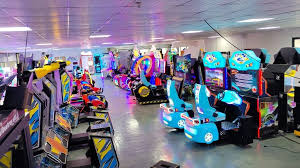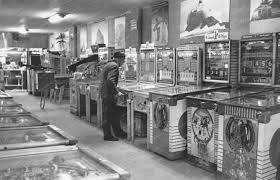
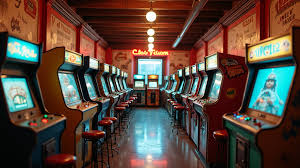
There was a stretch of years, roughly from the late 1970s into the mid 1980s, when the arcade was the beating heart of gaming culture. Long before consoles found their way into every living room and long before anyone imagined carrying a game library in their pocket, the arcade was where the newest, boldest, and most technically impressive games lived. Rows of glowing cabinets lined shopping mall corridors, bowling alleys, corner stores, and dedicated amusement centers, each one a small theater of light and sound competing for a quarter and a few minutes of attention. For Canadian collectors who grew up during this stretch, the memory of that era is not just nostalgia, it is the foundation of an entire hobby that continues to this day.
The Spark That Started It All
Games like Pong proved that a simple idea, executed well, could draw crowds and generate real revenue for operators. What followed was an explosion of creativity as manufacturers raced to outdo one another. Space Invaders demonstrated that tension and challenge could be built from modest hardware. Pac-Man proved that characters and personality could carry a game far beyond its mechanics. Asteroids, Defender, Galaga, Donkey Kong, and dozens of others each pushed some part of the format forward, whether that meant new control schemes, new visual styles, or entirely new genres. Every arcade operator wanted the newest cabinet because foot traffic followed novelty, and collectors today still chase these same machines because they represent turning points in design history.
In Canada specifically, arcades sprang up wherever there was foot traffic and disposable income among teenagers. Shopping malls in Toronto, Vancouver, Montreal, and smaller cities alike carved out corners for amusement centers, sometimes independently run and sometimes as part of larger chains. Local operators imported cabinets from American and Japanese manufacturers, and a smaller number of Canadian companies tried their hand at building or distributing machines domestically, though most of the industry’s manufacturing power remained concentrated south of the border and overseas.
The Machines Themselves
Part of what made the golden age so distinct was the sheer physicality of the experience. These were not abstract digital objects; they were large wooden or fiberglass cabinets with specific control layouts engineered for specific games. A cabinet built for a flight simulator might include a yoke and throttle. A racing cabinet might include a full seat and steering wheel. Even simpler titles had bespoke button layouts, trackballs, or spinners designed to make the gameplay feel tactile and immediate in a way that home systems of the era simply could not replicate. This is part of why arcade cabinets remain so prized among collectors today: they are artifacts of a design philosophy where form followed function in very literal, mechanical ways.
The artwork mattered too. Side panels and marquees were illustrated by commercial artists working under tight deadlines, often exaggerating the game’s premise far beyond what the actual pixel graphics could deliver. A modest looking space shooter might be advertised with a marquee depicting a sprawling cosmic battle, and that gap between promise and delivery became part of the charm collectors appreciate when restoring these machines today.
Decline and the Home Console Shift
By the mid to late 1980s, the arcade’s dominance began to erode. Home consoles, led by systems like the Nintendo Entertainment System, offered increasingly capable experiences that people could enjoy without spending a steady stream of quarters. Where an arcade visit had once been the only way to experience cutting edge graphics and gameplay, a growing number of households now had access to something comparable, or at least good enough, in their own living rooms. Arcades did not disappear overnight, but the economics shifted. Operators had to work harder to justify cabinet purchases, and many independent arcades quietly closed their doors over the following decade as mall traffic patterns changed and interest diversified.
For Canadian collectors and CGCC.ca members, this decline is precisely why the hobby exists today. As arcades closed, cabinets were liquidated, sold to private buyers, sometimes discarded outright. Many machines that once anchored a mall food court corner ended up in basements, garages, and storage units across the country, waiting decades for someone to rediscover and restore them. The community’s ongoing efforts to document, repair, and preserve these machines is a direct continuation of that golden age, keeping a piece of gaming’s formative years alive for a new generation to experience firsthand rather than only read about.
Why It Still Matters
Understanding the golden age arcade era gives context to everything that followed in gaming, from home console design philosophy to the current resurgence of interest in physical, tactile gaming experiences. Modern barcades and retro gaming bars owe a direct debt to this period, as do countless indie developers who draw inspiration from the tight, high stakes design of classic arcade titles. For collectors, every cabinet restored is a small act of historical preservation, keeping alive not just a machine but a specific moment in cultural history when a room full of glowing screens could hold an entire neighborhood’s attention on a Friday night.