The physical design of the arcade cabinet evolved dramatically over the span of just a decade or two, and tracing that evolution offers a useful lens for understanding broader shifts in gaming technology, design philosophy, and player expectations. What began as simple wooden boxes housing basic electronics gradually became increasingly sophisticated, purpose built enclosures engineered around specific gameplay experiences.
The Earliest Cabinets
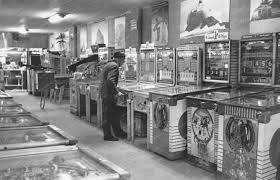
Pong’s original cabinet, and the wave of similar cabinets that followed in its immediate wake, were relatively utilitarian by later standards. A screen, a coin mechanism, one or two simple control knobs, and a wooden enclosure were often all that was required. The gameplay itself was simple enough that elaborate control schemes were unnecessary, and manufacturers focused their design energy on making the cabinets sturdy enough to survive constant public use rather than on visual flourish.
As games grew more complex through the mid to late 1970s, cabinet design began to diversify. Different genres demanded different control inputs, and manufacturers started tailoring cabinet layouts to match specific gameplay needs rather than relying on a single generic control panel across every title.
The Golden Age Design Explosion
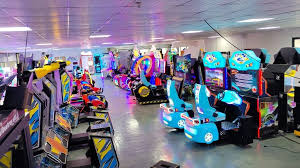
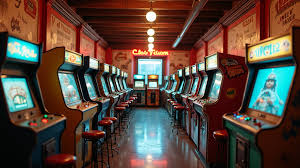
By the early 1980s, cabinet design had become a genuine creative discipline in its own right. Upright cabinets with joysticks and buttons became standard for action titles. Cocktail table cabinets, allowing two players to sit across from each other, found a home in bars and restaurants where table space could double as a gaming surface. Sit down cabinets with dedicated seating emerged for racing and flight titles, aiming to deliver a more immersive experience that a standard upright simply could not replicate.
Custom control schemes became a hallmark of this era. Trackballs offered smooth, precise movement for titles like Centipede and Missile Command. Spinners provided fine rotational control for games like Tempest and Arkanoid. Dedicated flight yokes, steering wheels, and light guns each carved out their own cabinet categories, transforming the arcade floor into a genuinely diverse landscape of physical interfaces rather than a uniform row of identical boxes.
Artwork and Marquee Design
Cabinet artwork evolved alongside the hardware itself. Early cabinets often featured relatively simple graphics, but as competition intensified, manufacturers invested more heavily in eye catching side art, backlit marquees, and control panel overlays designed to grab attention across a crowded arcade floor. This artwork frequently outpaced what the actual game hardware could visually deliver, creating an aspirational gap between the promise of the box art and the reality of the blocky, low resolution sprites running on screen, a gap that became part of the era’s distinctive visual identity.
The Shift Toward Standardization
As the arcade industry matured through the late 1980s and into the 1990s, cost pressures and the rise of JAMMA standardized wiring harnesses pushed the industry toward more modular cabinet designs. Rather than building an entirely bespoke cabinet for every new title, manufacturers increasingly designed games to fit into standardized cabinet shells, with operators able to swap out circuit boards to refresh their arcade’s lineup without purchasing entirely new cabinets each time. This shift made business sense for operators but also marked the gradual end of the wildly diverse, purpose built cabinet designs that had defined the earlier golden age.
What Collectors Look For Today
For today’s collectors, understanding this design evolution is essential to properly identifying, dating, and valuing a given cabinet. A custom sit down racing cabinet from the early 1980s represents a fundamentally different kind of artifact than a standardized JAMMA shell from the following decade, even if both technically qualify as arcade cabinets. Original, unmodified control panels, intact marquees, and period correct artwork all significantly affect both the historical value and the restoration approach for any given machine, making cabinet design literacy one of the most practically useful areas of knowledge a collector can build over time.