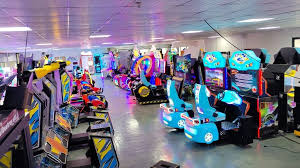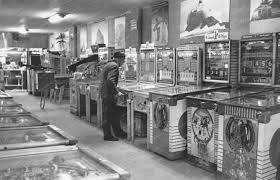
The shift from arcade dominated gaming to home console gaming did not happen overnight, and in Canada it followed a slightly different rhythm than in the United States due to import patterns, retail availability, and regional distribution deals. Still, the broad strokes are familiar to any collector who lived through it: a steady march of increasingly capable machines that moved gaming out of public spaces and into private homes, fundamentally reshaping how an entire generation related to the hobby.
Early Systems and Limited Reach
The earliest home consoles, machines like the Magnavox Odyssey and the Atari 2600, made their way into Canadian households throughout the mid to late 1970s and early 1980s, though availability and marketing often lagged slightly behind the American market. These early systems offered a taste of arcade style gaming at home, but the technical gap between what a home console could produce and what a full sized arcade cabinet could produce remained substantial. A home version of a hit arcade game was often a simplified approximation, missing detail, color depth, or smooth animation compared to its coin operated counterpart.
Despite these limitations, the appeal was obvious. Owning a console meant unlimited play without feeding it coins, the ability to play with friends and family in a private setting, and a permanent library that did not depend on which cabinets happened to be installed at the local arcade that month. For many Canadian families, a home console purchase during this era was a genuine financial commitment, often centered around holiday gift giving, and the systems that succeeded tended to be the ones that offered the clearest value against that backdrop.
The Crash and the Reset
The North American video game market experienced a significant contraction in the early 1980s, driven by an oversaturated market, a flood of low quality software, and consumer fatigue. Canadian retailers felt this contraction alongside their American counterparts, with console and cartridge inventory sitting unsold on shelves and several publishers exiting the business entirely. It was a sobering moment for an industry that had, only a few years earlier, seemed unstoppable.
The recovery that followed, driven substantially by Nintendo’s careful, quality controlled approach to licensing and hardware, reestablished consumer trust in home gaming. The Nintendo Entertainment System’s arrival reset expectations for what a home system could offer, both in terms of hardware capability and in terms of the curated, higher quality software library that came with it. This reset is a pivotal moment that many CGCC.ca members point to as the true beginning of the console gaming culture that persists today.
Regional Distribution and the Canadian Experience
Canada’s relationship with console gaming was shaped by its position as a market adjacent to, but distinct from, the much larger American market. Distribution deals, pricing in Canadian dollars, and regional marketing campaigns meant that Canadian gamers sometimes experienced product launches slightly differently than their American neighbors. Import culture also became a notable thread within Canadian collecting circles, with collectors seeking out Japanese or European versions of consoles and cartridges that offered variations, exclusive titles, or hardware differences unavailable through official domestic channels.
This regional distinctiveness is part of why Canadian collector communities such as CGCC.ca place value on documenting local retail history, regional pricing, and the specific path certain consoles took to reach Canadian shelves. It adds a layer of historical specificity that a purely American focused retrospective would miss entirely.
From Cartridges to Culture
As console libraries grew deeper through the late 1980s and into the 1990s, gaming stopped being a novelty and became a genuine cultural fixture, particularly among younger Canadians. School yard conversations turned to which games friends owned, rental stores stocked growing cartridge libraries, and gaming magazines built entire audiences around console specific coverage. This period cemented gaming as a mainstream hobby rather than an arcade curiosity, setting the stage for the console wars, genre explosions, and hardware generations that would follow through the 1990s and beyond.
For today’s collectors, this era represents some of the richest territory for building a meaningful collection, both because of the sheer volume of surviving hardware and software, and because of the strong emotional connection so many Canadian collectors have to consoles they grew up with. Every cartridge tracked down, every console restored to working order, reconnects directly to this formative period when gaming first became a true household fixture across the country.